Aiming to reduce overdoses, Christine Neeb, MD, leads a unique partnership with the Colorado Department of Corrections that offers comprehensive care to Aurora residents with substance use disorders who were recently released from prison.
7 minute read
by Tayler Shaw | July 2, 2025
When an incarcerated person who struggles with substance use is released from a Colorado prison, it may be difficult for them to find a long-term health care provider who can help them manage both their chronic health needs and addiction treatment — unless they are being released into Aurora, Colorado.
Thanks to a first-of-its-kind partnership with the Colorado Department of Corrections that was spearheaded by University of Colorado Department of Medicine physician Christine Neeb, MD, when an Aurora-bound incarcerated individual with a substance use disorder is nearing the end of their time in prison, they are given the opportunity to connect with Neeb. As a physician trained in family medicine and addiction medicine, Neeb can offer both primary health care and specialized addiction treatment to these patients during the same appointment, as well as connect them to additional resources to help pave a pathway toward success.
“We know there is a super high risk of overdose and death among people recently released from prison. The crux of our work is saving lives by making sure these patients do not have a gap in health care,” says Neeb, an associate professor in the Division of General Internal Medicine. “If we keep patients in recovery, then they’re much more likely to be successful long term — to parent well, to hold down jobs, and to become active members of the community.”
Connecting with patients
Potential patients for Neeb are identified by physicians and social workers with the Colorado Department of Corrections. Typically, it is a person who has a substance use disorder and a chronic illness or condition that needs to be managed. If the individual is interested in the program, their information is sent to Neeb’s team.
“The patients I see could be at any prison facility in the state of Colorado, as long as when they are released, they are planning on living in the Aurora community,” Neeb says.
Before the incarcerated person is released from prison, Neeb will meet with the individual virtually to introduce herself and the program, explaining that they will be able to get their primary care and addiction treatment all in one place. She also gathers information about their health concerns and goals.
Neeb’s team then coordinates an in-person clinic visit at the CU Anschutz Medical Campus for the patient within roughly a week after their release from prison.
“During the telehealth visit, I emphasize to the patient that if they return to using drugs after getting released, they can still come see me in person,” Neeb says. “Abstinence is not required, because we want people to be safe.”
How a unique partnership began
Having previously worked as a physician in Chicago who cared for underserved populations, Neeb has seen how valuable it is for patients to get their care all in one place.
“A lot of times, these patients with substance use disorders would have to choose between their primary care and addiction care because they just don’t have the time, resources, transportation, or money to be able to get both services separately,” Neeb says.
When Neeb joined CU roughly two years ago, she wanted to establish a program so that these patients didn’t have to choose. She pitched the idea of a partnership to the Colorado Department of Corrections, which responded with excitement, she says, as the department had not partnered with a primary care clinic before.
It was the start of a long process that involved developing new billing structures, navigating regulations and funding, and determining the best way to format the partnership. Neeb worked closely with colleagues like Gena Weir, MPH, the director of strategy and operations in the CU Division of General Internal Medicine, to develop the program and formalize the partnership.
“This type of partnership has not been done anywhere in the state of Colorado,” Weir says. “We had regular meetings with the Colorado Department of Corrections for a year, building a relationship with them. We, at CU, are so lucky to have Christine. She had this vision, and she established an effective team.”
‘It’s worth investing in’
Neeb began seeing her first patients in October of 2024, and she’s already seen the benefits of the program.
“I had one patient who was so relieved because they had several medical conditions that they needed help addressing,” Neeb says. “During our virtual visit, they said to me, ‘Thank you so much. I was really worried about what I was going to do when I was released, and it makes me feel better that we have made a plan together for how we’re going to manage this.’”
Schuckert has witnessed how the program boosts patients’ confidence in themselves and the health care system, saying: “Having these positive experiences allows them to build trust that our team is going to support them and not judge them. We want to help them navigate the ebbs and flows of everything they are going through and positively reinforce their ability to trust other service providers in the community and reach out for help.”
As of June, Neeb had virtually seen more than 27 incarcerated patients, and of those who had been released from prison, she had seen 15 in person so far.
“I want to continue expanding this program and take on more patients, as well as collect data on whether our work helps our patients stay out of prison longer, keep them in recovery, and maintain employment and housing,” Neeb says.
Partially funded by grants, Neeb and Weir also are looking at how this partnership can sustainably continue in the future so they can further their efforts to empower patients with skills to be successful in life.
“I hope that other clinics and organizations can look to our program and launch similar programs in their communities, because these types of programs are essential to helping the substance use rates go down,” Neeb says. “It’s worth investing in these types of partnerships because it helps the community as a whole.”
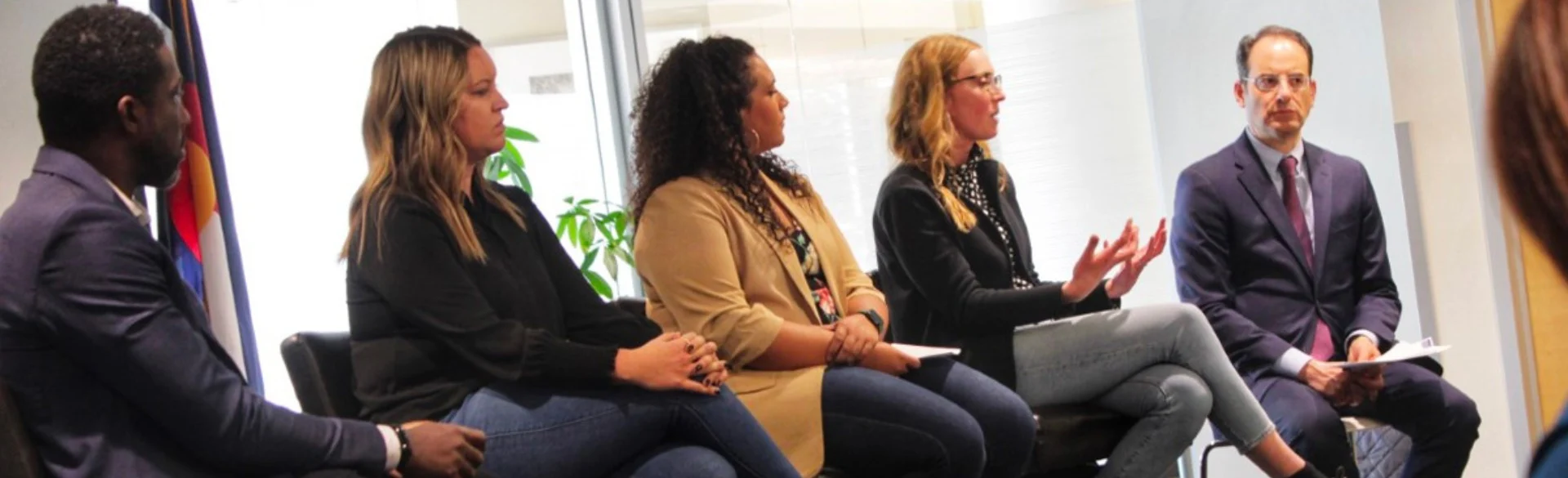
Image at top (from left to right): Felicia Gonsalez, Erica Olson, LCSW, Christine Neeb, MD, Sierra Schuckert, LSW, and Gena Weir, MPH, at the CU Anschutz Medical Campus. Image taken by Justin LeVett Photography.
Original article found here: https://news.cuanschutz.edu/department-of-medicine/primary-care-addiction-medicine-incarceration?utm_source=today_newsletter&utm_medium=email&utm_campaign=jul_23_25